
What Changes Your PDR Quote? Factors That Affect Dent Repair Cost
Two dents that look the same in a photo can get very different quotes. That’s not guesswork — it’s the result of a handful of variables that technicians weigh every time. If you understand them, you can compare estimates fairly and avoid surprises on the day.
This guide walks through exactly how a PDR quote is built. For the price ranges themselves, see our main Las Vegas PDR cost guide.
How a PDR Technician Prices a Dent
Most quotes come down to two questions: how much skilled time will this take, and are there any extra costs (access, materials, travel)? Everything below feeds into those two.
The Six Factors That Change Your Quote
1. Dent size
Measured across the widest point. Small dings take minutes; palm-sized dents can take much longer because the metal must be raised slowly to avoid high spots.
2. Depth
A shallow dent usually releases with a few passes. A deep one stretches the metal and needs more steps to relax it back into shape.
3. Location
Flat, open areas such as the middle of a door are the easiest. Dents near edges, body lines, wheel arches or behind bracing are harder, and reaching them can take extra time.
4. Creases and sharp lines
A crease is a fold, not a round dent. These take significantly longer, and in some cases can only be improved rather than fully removed.
5. Material
Steel is more forgiving. Aluminum does not move the same way and tends to crack paint if pushed too fast, so it costs more and may not be suitable for every dent.
6. Number of dents
More dents mean more time, but multiple dents on one panel are often priced as a package. Hail jobs are quoted by total workload.
Extras That May Appear on a Quote
- Panel access work: removing a trim piece, lamp or liner to reach the back of a panel.
- Travel: some mobile technicians charge for distance; ask upfront.
- Glue-pull tabs: used when access from behind isn’t possible; usually included.
- Rush or same-day work: may carry a premium during busy periods such as after storms.
What a Fair Quote Looks Like
A trustworthy estimate is specific. It lists each dent or panel, explains the method, gives a price (or tight range), and says what could change it. Be cautious about:
- A single flat price with no inspection or photos.
- Pressure to decide on the spot.
- A quote far below every other estimate. PDR takes skill; extremely low prices can mean rushed work.
- Refusal to say whether PDR is actually suitable for your dent.
Ways to Keep the Cost Down
- Fix small dings early. They’re cheapest before they spread across the panel or the paint cracks.
- Bundle: ask about pricing when several dents are done in one visit.
- Compare PDR and body shop quotes — see Mobile PDR vs. Body Shop.
- Check whether insurance applies. See our insurance guide.
Quick Reference: Typical Ranges
| Repair type | Typical range |
|---|---|
| Small door ding (under 1″) | $75 – $125 |
| Medium dent (1–3″) | $125 – $250 |
| Large dent (3–6″) | $250 – $450 |
| Crease dent | $200 – $500+ |
| Light hail damage | $400 – $800 |
| Moderate to severe hail | $800 – $2,500+ |
A Worked Example: Two Dents That Look Alike but Aren’t
Here is an illustrative comparison. Both dents are about the size of a golf ball, both on the driver’s side of a sedan. They get very different quotes.
| Dent A | Dent B | |
|---|---|---|
| Location | Middle of the front door | Rear quarter panel, close to the wheel arch |
| Depth | Shallow | Moderate |
| Access | Open from behind via the door panel | Limited by bracing; needs glue-pull tabs |
| Paint | Intact | Intact, slight stress line |
| Likely estimate | $100 – $150 | $200 – $300 |
The size is the same. The difference is access and metal stiffness near the wheel arch, which means the technician must work more slowly and carefully to avoid leaving stress marks. This is why a good estimate is based on photos and questions, not a single number quoted over the phone.
Questions to Ask Before You Accept a Quote
- Is this a price or a range, and what could move it?
- Does the price include travel and any glue-pull or access work?
- Will you inspect the dents in person before starting?
- What happens if PDR doesn’t fully remove the dent?
- Is the work guaranteed, and in what way?
- How long will the repair take?
A confident technician answers these plainly. Vague answers are a reason to keep looking.
Las Vegas Details That Can Influence a Quote
Parking-lot damage is common across the valley, and technicians often see the same patterns: door dings along the sides of cars parked in tight spaces, shopping-cart dents on rear quarter panels, and the odd falling object. These are generally straightforward jobs. What changes the number is the vehicle: aluminum panels on newer trucks and SUVs, heavily braced rooflines and sharp body lines are all slower to work than a flat steel door.
Heat also affects scheduling. In peak summer, panels left in direct sun get too hot to work on comfortably, so mobile technicians often start early or work in shade. If you can offer a garage, carport or shaded spot, you may help the job go faster.
Why Time Is the Biggest Part of the Price
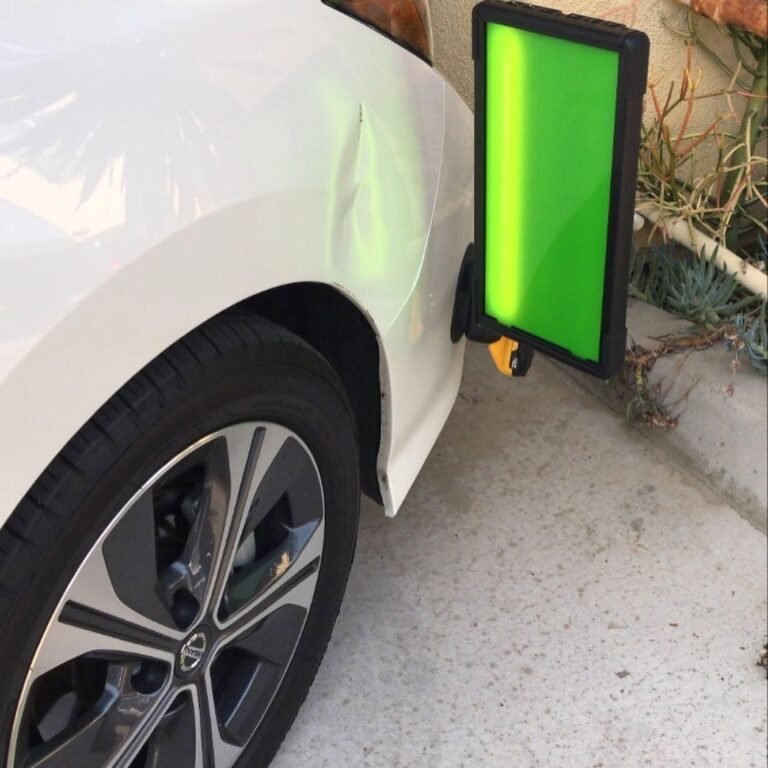
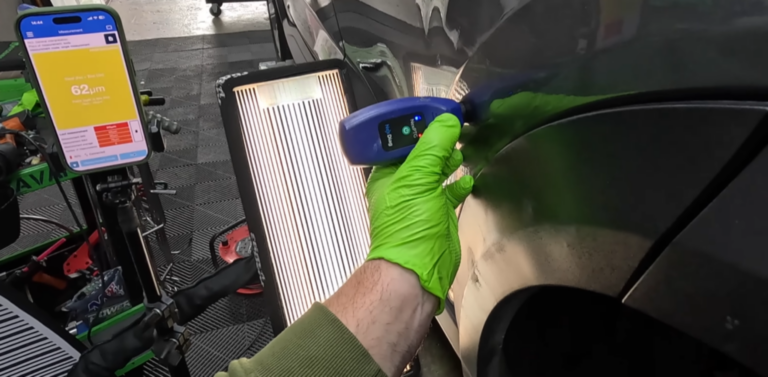
Unlike a repaint, PDR involves very little material. Almost all of the price is skilled labour: the hours a technician spends reading the dent under a reflector, choosing tools, and making dozens of small, controlled pushes. That is why technicians think in terms of time, and why access and metal type matter so much.
As a rough guide, a small ding on an open panel can take well under an hour, a medium dent can take a couple of hours with careful finishing, and a long crease or a panel with limited access can take much longer. The price tracks those hours, with allowances for travel and any panel-access work. When you compare quotes, it helps to ask how long each shop expects the job to take, because a very fast time for a difficult dent can be a sign of corners being cut.
Access Holes: A Detail Local Drivers Ask About
A recurring question in Las Vegas forum threads is why a technician might need to drill a small hole in the door jamb or inner wheel arch. The explanation given by experienced technicians is that some dents sit where no tool can reach from the inside, and a small, plugged access hole can be the cleanest way in. Commenters noted that many used cars have had this done without the owner realising, because the plug sits behind trim and looks factory.
It’s worth asking about before the job. A good technician will tell you whether access work is needed, where it would be, and whether it is included in the price. If a quote seems low for a hard-to-reach dent, missing access work is a common reason.
Where this comes from: alongside our own price guide, we reviewed public discussions from Las Vegas drivers on Reddit (including r/PaintlessDentRepair, r/vegaslocals and r/LasVegas), local Facebook groups and Quora. These are individual experiences, not verified statistics, so treat them as colour, not proof, and always get a written estimate for your own car.
Frequently Asked Questions
Can I get an exact price without bringing the car in?
Usually you can get a reliable range from clear photos. Final pricing is confirmed once the technician sees the dent in person.
Why is my hood or roof more expensive?
These panels often have bracing and insulation behind them, which limits tool access and slows the work.
Is a bigger dent always more expensive?
Not always. A large shallow dent can be easier than a small sharp crease.
Does the colour of my car affect the price?
Not for PDR. Since the paint isn’t touched, colour matching isn’t part of the work.
Is a free estimate really free?
It should be. Photo estimates cost nothing, and in-person estimates are normally free when the technician is already coming to you for the repair.
Can I send photos at night?
You can, but daylight in shade is better. Photos taken at an angle show the dent’s depth more clearly than straight-on flash shots.
What if the dent is on an old car with faded paint?
Faded paint is fine as long as it isn’t cracking or flaking. Ask the technician to check the paint before the job.
Is PDR worth it on an older car?
Often yes. A tidy body helps resale and trade-in value, and PDR is usually much cheaper than a repaint.
Will access work show afterwards?
A properly done access repair is typically hidden behind trim or a seal. Ask the technician where it would be and how it is finished.
Get a Quote You Can Trust
Send us photos and your vehicle details and we’ll give you a straightforward estimate, with a clear note on anything that might change it.