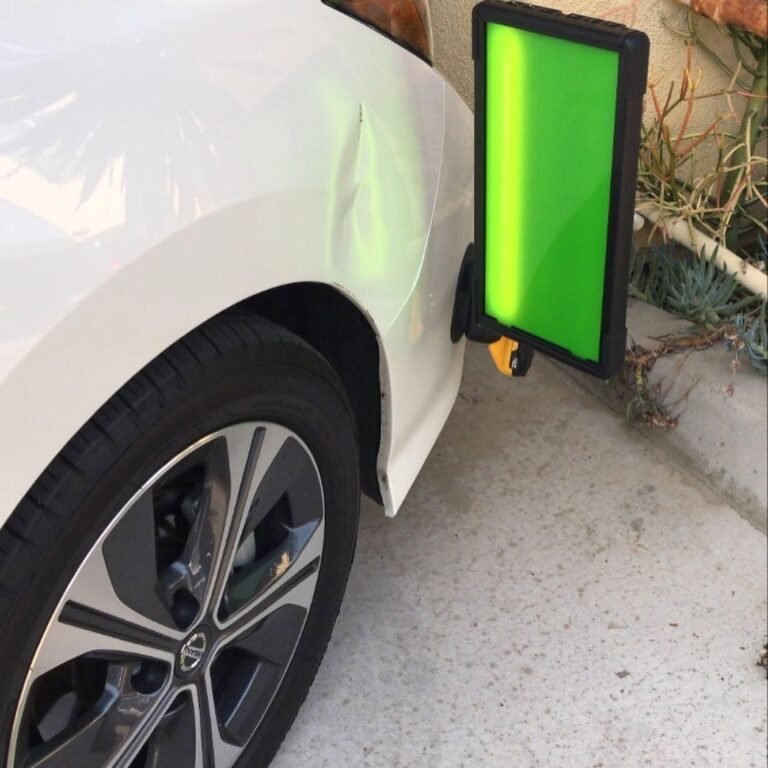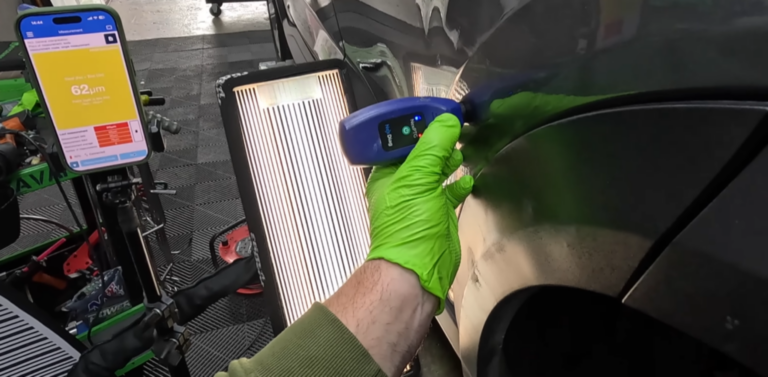

Before and After: What Real Paintless Dent Repair Results Look Like
Photos are the most convincing way to show what paintless dent repair can do, but a before-and-after photo can only show so much. This guide explains what an “invisible” PDR result actually looks like, what you can realistically expect for different types of dents, and what PDR can’t do perfectly. It’s designed to help you set the right expectations before you book.
What “Invisible Repair” Actually Means
When technicians say PDR is “invisible,” they mean that, after the repair, the panel looks and feels as if the dent had never been there: the surface is smooth, reflections run straight, and there is no filler, sanding or repaint. The original factory paint is still there. That doesn’t mean it will be perfect for every dent, but for suitable dents, the result can be impossible to spot even under close inspection.
Types of Repairs and What Results to Expect
| Dent type | Typical result | Notes |
|---|---|---|
| Small door ding | Usually invisible | Shallow, intact paint, open access |
| Medium parking-lot dent | Usually invisible to near-invisible | Depends on depth and location |
| Hail dents | Usually invisible on light to moderate damage | Each dent is worked individually |
| Minor crease | Greatly improved; sometimes invisible | Depends on length, depth and paint |
| Dent on an edge or body line | Improved; may leave slight trace | Metal is stiffer and harder to reach |
| Dent on an aluminum panel | Often good, but can be limited | Aluminum is less forgiving |
What PDR Cannot Do Perfectly
- Dents with cracked or chipped paint, since PDR doesn’t repair paint.
- Very sharp creases or folds, which can leave a faint line.
- Severely stretched metal that won’t return to shape.
- Dents on reinforced edges where tools can’t reach.
- Damage to plastic bumpers that are torn or cracked.
A good technician will tell you where your dent sits on this scale before the work. If a trace may remain, you should know in advance.
How to Judge a Before-and-After Photo
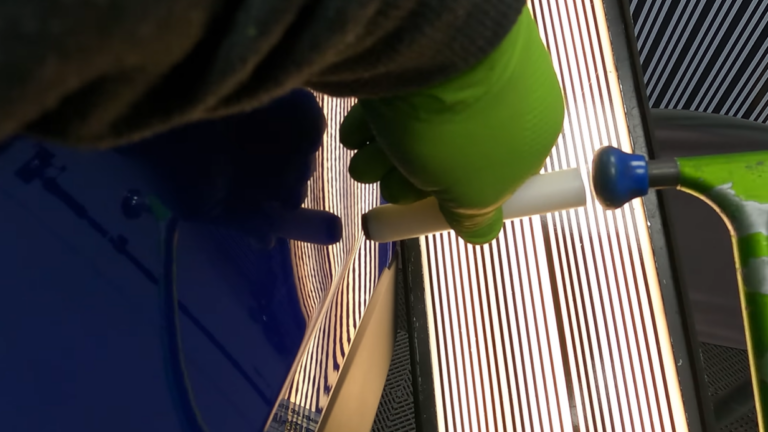
Photos can mislead, so look at them critically. Check that the before and after are taken from the same angle and in the same light. Look at the reflection lines, because in a good repair the lines run unbroken across the panel. Be cautious of after photos taken in flat light, which can hide imperfections, and ask for a shot at an angle. Real examples of dents like yours are more useful than a dramatic example of something different.
A Worked Example: Reading a Result
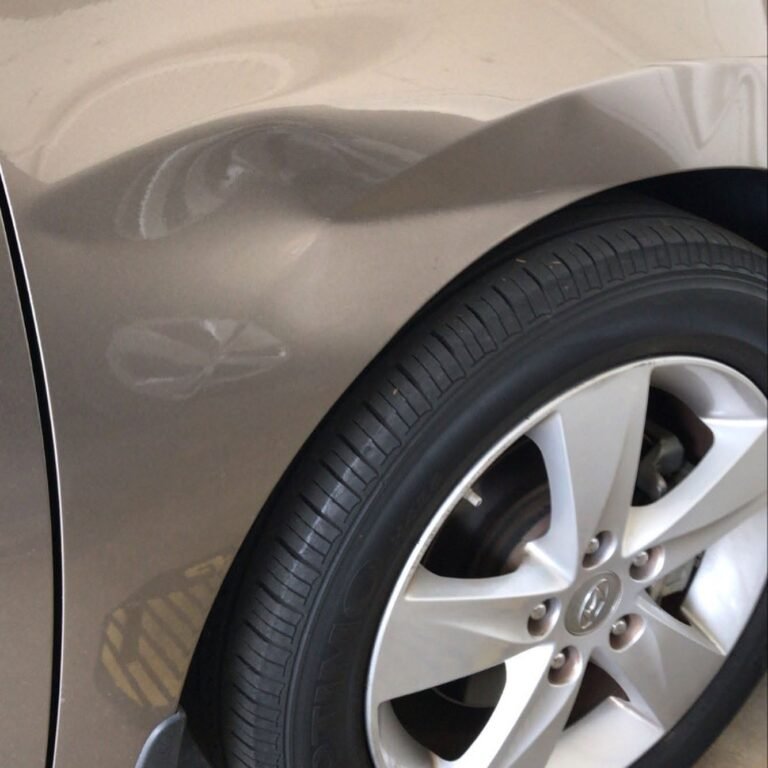
This is an illustrative scenario, not a real customer. A Las Vegas driver has a palm-sized shallow dent on a front fender of a dark grey SUV. The technician photographs the dent in shade from two angles, one straight on and one from the side with a reflector board, then repairs it in about 90 minutes.
| Check | Before | After |
|---|---|---|
| Reflection lines | Broken and curved | Straight and continuous |
| Surface feel | Visible dish | Flat |
| Paint | Intact | Intact; original factory finish |
| Visible from 3 feet | Yes | No |
| Close inspection at an angle | Obvious | Very hard to detect |
That’s the kind of outcome to expect for a suitable dent. For a crease or edge dent, the table would look different, with an improvement but perhaps a faint trace.
How Paint Condition Affects the Result
PDR works best on healthy paint. Older paint that’s been baked in the desert sun may be more brittle, and in rare cases small cracks can appear as the metal moves. A technician inspects the paint before starting and will tell you if there’s a risk. If paint is already chipped or cracked in the dent, PDR may still improve the shape, but you’ll need a touch-up for the paint. Healthy, regularly washed and waxed paint is more forgiving.
Why Technician Skill Shapes Results
Two technicians can work on the same dent and produce very different results. The best are patient, use proper lighting and know when to stop. Less experienced ones may leave high spots or stress marks. When you look at before-and-after examples, you’re really judging the person behind the tools. See our guide to choosing a PDR technician.
What to Expect From a PDR Result: A Quick List
- A smooth, level panel with straight reflections
- Original factory paint, with no repaint or filler
- No colour mismatch
- No curing time; the car is ready immediately
- Honest advice if a trace of the dent may remain
Hail Damage: Before and After
Hail repairs can be particularly impressive, because a panel that looked pitted can return to a smooth, uniform surface. Results depend on the number and depth of dents, and the panel material. A roof covered in dozens of dents can be restored to a flawless finish when the dents are shallow and the paint is intact. For severe damage, some dents may need extra attention, and in the worst cases a panel may be better replaced. See our hail damage guide.
Setting Realistic Expectations Before You Book
The best way to avoid disappointment is to have an honest conversation before the repair. Ask the technician what result to expect for your specific dent, not just PDR in general. Ask whether there’s any risk to the paint, and whether a trace of the dent might remain. Ask how they’ll handle it if the first attempt doesn’t fully remove it. Technicians who answer these questions clearly are the ones who deliver good results.
It also helps to understand that PDR is a craft. Even in good hands, each dent behaves differently depending on the metal, the paint, the temperature and the shape of the dent. That’s why a photo estimate is a guide, and an in-person look is the final word. If a technician promises perfection on every dent without seeing it, be cautious.
How to Check Your Own Repair
- Wash the car so the surface is clean.
- Park in open shade, not direct sun.
- Look along the panel from several angles, including low and high.
- Watch how reflections of a straight object, like a roofline, run across the area.
- Run your hand over the surface to feel for high or low spots.
- Compare with the same area on the other side of the car.
If you spot anything off, mention it before the technician leaves. Small adjustments are quick when the tools are still out.
What a Poor PDR Repair Looks Like
Knowing the signs of a bad repair helps you judge any result, including ours. In a Reddit thread, a driver described feeling bumps after a repair, and experienced technicians in the replies pointed to high spots, a visible lift mark and incomplete finishing. They noted that a sharp dent near a panel edge is hard even for a veteran and not a job for a beginner.
- Run your fingers lightly over the area: bumps or ridges suggest high spots.
- Look for a faint line where the tool lifted the metal.
- Check reflections: if they wobble around the repair, it isn’t finished.
- Compare with the opposite side of the car.
- Ask the technician to correct anything before they leave.
If a repair is poor, forum advice is consistent: speak up straight away, and be aware that fixing someone else’s bad repair can cost more than a standard repair. That’s why choosing carefully matters, and why we encourage you to ask for examples before you book.
Frequently Asked Questions
Will I be able to see the repair?
For suitable dents, usually not. A technician will tell you in advance if a trace may remain.
Do you show before-and-after photos?
Ask any technician for examples of dents like yours. Photos in similar light are the most useful.
Can PDR fix a dent completely if the paint has a scratch?
PDR fixes the dent but not the scratch. A scratch may need polishing or touch-up.
How can I check the result?
Look at the panel from several angles and in different light, and check that reflections run smoothly.
What if I’m not happy with the result?
Tell the technician before they leave. Ask about their touch-up policy upfront.
Will the repair last?
Yes. The metal returns to its shape and stays there.
Can a bad PDR repair be fixed?
Sometimes. A skilled technician may improve it, but correcting a poor repair is harder than doing it right first time, and results vary.
See What PDR Can Do for Your Dent
Send a photo and we’ll tell you honestly what result to expect, what it will cost and when we can come to you.