
What Is PDR? A Beginner’s Guide to Paintless Dent Repair
If you’ve never needed a dent fixed before, the idea of “paintless” repair can sound too good to be true. How can a dent disappear without any sanding, filler or paint? This beginner’s guide explains what paintless dent repair (PDR) is, how it works, what it can and can’t fix, and what to expect if you book a repair in Las Vegas.
What Is Paintless Dent Repair?
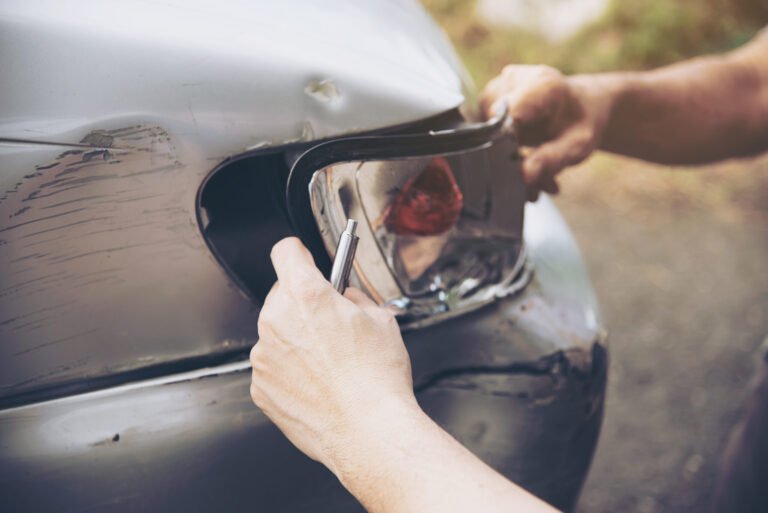
Paintless dent repair is a method of removing dents by reshaping the metal from behind the panel, so the original paint stays in place. Technicians use specialty rods, levers and, where access is limited, glue-pull tabs to ease the metal back to its factory shape. Because nothing is sanded, filled or sprayed, the finish that came from the factory remains intact.
The method has been used for decades and is widely accepted by dealers, insurers and lease companies. It is the standard way to fix hail damage and is also well suited to door dings, parking-lot dents and minor creases.
Why Does It Work?
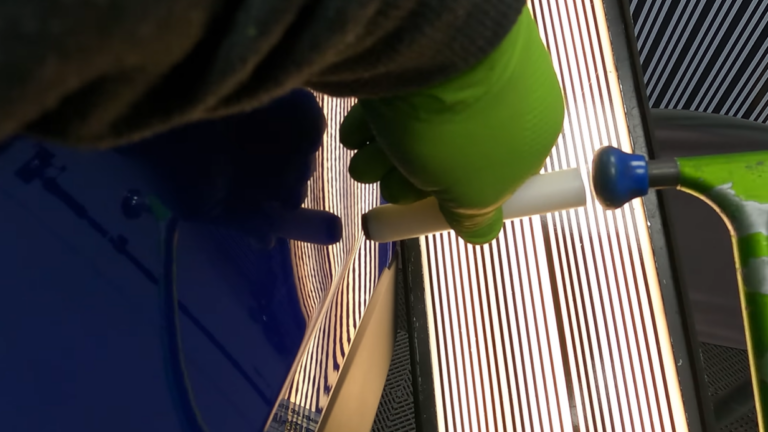
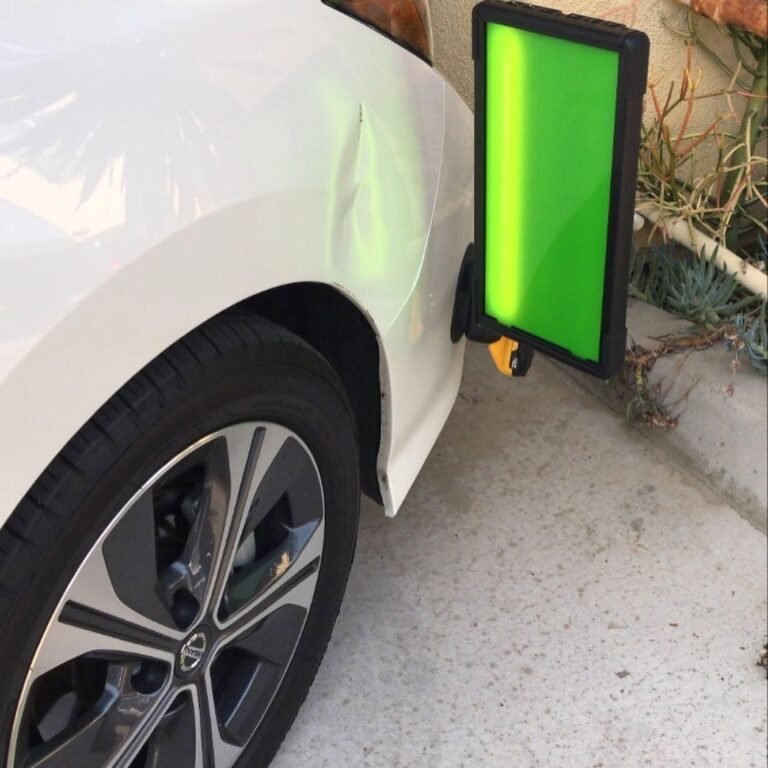
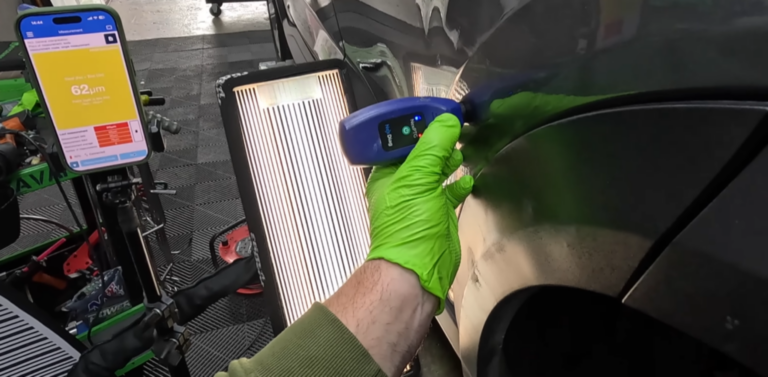
Modern car paint is flexible. When a panel is dented by something like a hail stone or a door edge, the metal stretches and the paint flexes with it rather than cracking. As long as the paint hasn’t broken, the metal can be coaxed back, and the paint returns with it. A technician works slowly, using many small pushes rather than one big one, and checks progress under a reflector light that exaggerates tiny highs and lows.
What Tools Do Technicians Use?
- Rods and levers: long steel tools with different tips, used to push dents out from behind the panel.
- Glue-pull kits: small tabs glued to the dent so it can be pulled out when there’s no access from behind.
- Reflector boards and lights: show the shape of the panel’s surface, revealing every low and high spot.
- Tap-down tools: soft-tipped hammers used to flatten tiny high spots.
- Access tools: for removing trim, lamps or liners to reach the back of a panel.
What Can PDR Fix?
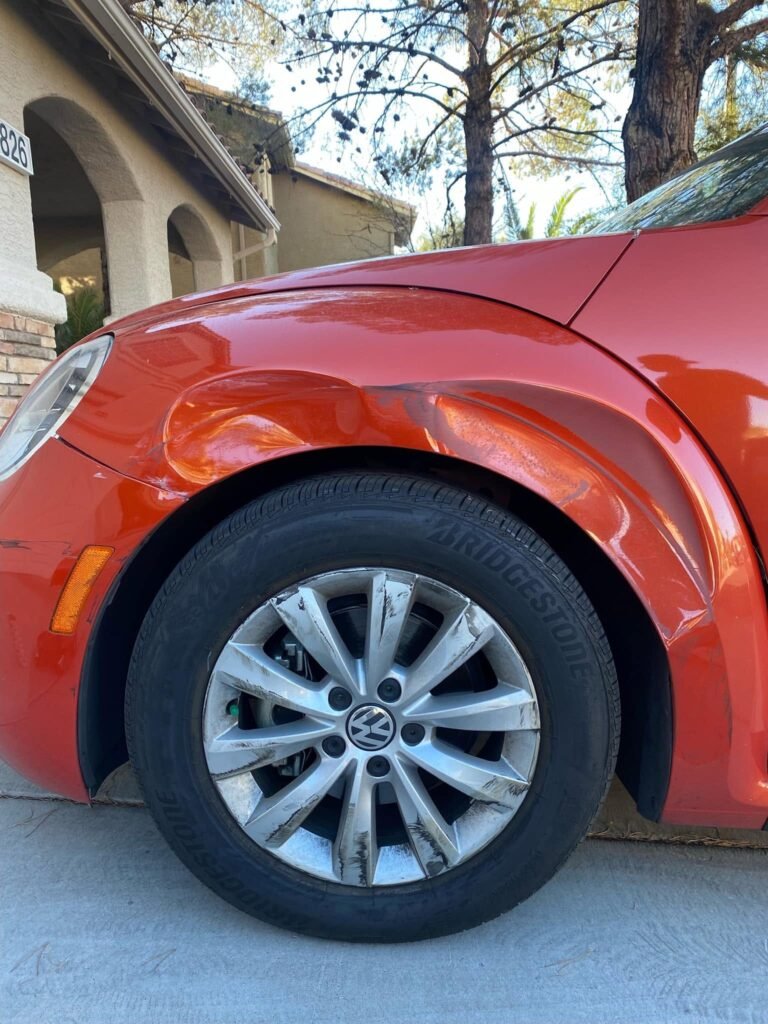
- Door dings and parking-lot dents
- Hail damage
- Shopping-cart dents
- Minor creases, depending on length and depth
- Dents on many steel and aluminum panels
What Can’t PDR Fix?
- Dents with cracked, chipped or flaking paint
- Severely stretched or creased metal
- Damage on heavily reinforced edges with no tool access
- Cracked or torn plastic bumpers
- Structural or frame damage
A good technician will tell you honestly if your dent isn’t suitable. In some cases PDR can improve a dent significantly even if it can’t remove it completely.
How Much Does PDR Cost?
| Repair type | Typical range |
|---|---|
| Small door ding (under 1″) | $75 – $125 |
| Medium dent (1–3″) | $125 – $250 |
| Large dent (3–6″) | $250 – $450 |
| Crease dent | $200 – $500+ |
| Light hail damage | $400 – $800 |
| Moderate to severe hail | $800 – $2,500+ |
A Worked Example: A First-Time PDR Customer
This is an illustrative scenario, not a real customer. A Las Vegas driver finds a shopping-cart dent about the size of a golf ball on the rear door of their sedan. They’ve never had a dent repaired, and they’re unsure whether to visit a body shop or call a mobile technician.
- They take two photos, one straight on and one from a low angle, and send them for an estimate.
- The technician replies that the paint looks intact and the dent is suitable, and quotes $150 to $225.
- They book a slot the next morning at their workplace.
- The technician arrives, inspects the dent, confirms the price and completes the repair in about 45 minutes.
- The driver inspects the door from different angles, pays, and drives away.
Total time lost: under an hour. No rental car, no repaint, no colour match.
Why Las Vegas Drivers Choose PDR
Southern Nevada drivers deal with tight parking at shopping centres and casinos, summer heat, monsoon storms and long daily commutes. PDR fits that lifestyle: it comes to you, takes hours rather than days, and preserves the original paint that is already working hard against UV and heat. It is also popular with people leasing vehicles and anyone planning to sell, since a clean paint history matters to buyers.
How to Prepare for Your First PDR Appointment
- Wash the car so dents are easy to see.
- Park in shade, a garage or a carport.
- Clear space around the car so doors can open fully.
- Make a list of every dent you want fixed.
- Ask for the price in writing before work begins.
PDR Myths and Misunderstandings
“It only works on tiny dings.”
Not true. PDR handles dents of many sizes, including large shallow dents and widespread hail damage. What matters is depth, location and paint condition, not just size.
“It’s a temporary fix.”
When done properly, the repair is permanent. The metal is returned to its shape and there is no paint, filler or putty to fail later.
“The paint must be perfect.”
The paint must be intact in the dented area, but older paint can still be suitable as long as it isn’t cracking or flaking. A technician checks first.
“Body shops are always better.”
For suitable dents, PDR usually matches or beats the finish of a repaint, because the original paint remains. For damaged paint or structural issues, a body shop is the right choice.
Who Benefits Most From PDR?
- Drivers with a few dings or a hail-damaged car
- People leasing a vehicle who want to avoid end-of-lease charges
- Anyone selling or trading in a car who wants to keep original paint
- Fleet managers who need vehicles back on the road quickly
- Owners of newer or specialty-paint vehicles
If you’re not sure which group you fall into, send a photo. A technician can tell you in a minute or two whether PDR is a good option.
What to Expect From the Finished Result
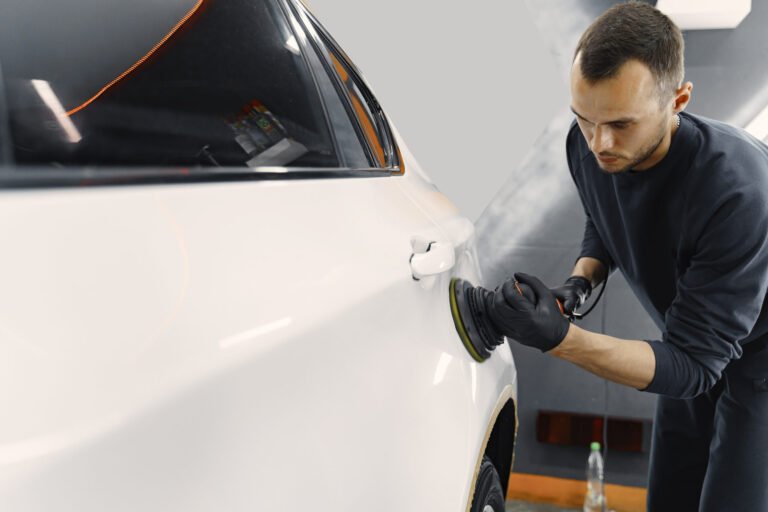
A good PDR repair leaves the panel smooth, with straight reflections and no visible mark. On very deep or creased dents, a technician may warn you in advance that a small trace may remain. The best technicians are honest about this and show you the result under light before you pay. If you’re unhappy with anything, speak up straight away; touch-ups are easiest while the technician is still on site.
Where to Learn More
If you want to go deeper, read The PDR Process Explained Step by Step for a detailed walkthrough, PDR vs. Traditional Dent Repair for a comparison with body shop repair, or our cost guide for pricing.
A Few Things Real Customers Ask
Reading Las Vegas threads, the same beginner questions keep coming up. People ask whether PDR will work on a particular dent (it depends on the paint, depth and access), whether a technician will need to drill a hole to reach it (sometimes, and it’s plugged afterwards), and whether it’s worth paying more for a more experienced technician (usually yes for hard dents). Others ask why PDR costs what it does when there’s no paint involved: the answer from technicians is that you’re paying for years of developed skill and the time it takes, not materials.
Where this comes from: alongside our own price guide, we reviewed public discussions from Las Vegas drivers on Reddit (including r/PaintlessDentRepair, r/vegaslocals and r/LasVegas), local Facebook groups and Quora. These are individual experiences, not verified statistics, so treat them as colour, not proof, and always get a written estimate for your own car.
Frequently Asked Questions
Is PDR as good as a body shop repair?
For suitable dents, it’s often better, because the original factory paint stays in place.
Will the dent come back?
No. Once the metal has been returned to its shape, it stays there.
How long does PDR take?
Small dings often take under an hour. Multiple dents or hail damage take longer.
Does PDR work in hot weather?
Yes. Technicians typically work in shade or garages, or early in the day, to avoid hot panels.
Is PDR covered by insurance?
It can be, depending on the cause and your coverage. See our insurance guide.
Can I do PDR myself?
DIY kits exist, but the technique takes training. Mistakes can crack paint or stretch metal, making the repair harder and more costly.
Why does PDR cost so much if there’s no paint?
Because the cost is skilled labour, not materials. A good technician has spent years learning to read the metal and release dents without cracking paint.
Ready to Try PDR?
Send a photo of your dent and we’ll tell you whether PDR will work, what it will cost and when we can come to you.